How to Start a Budget for the First Time (Zero Experience Required)
 The FreeBudget Team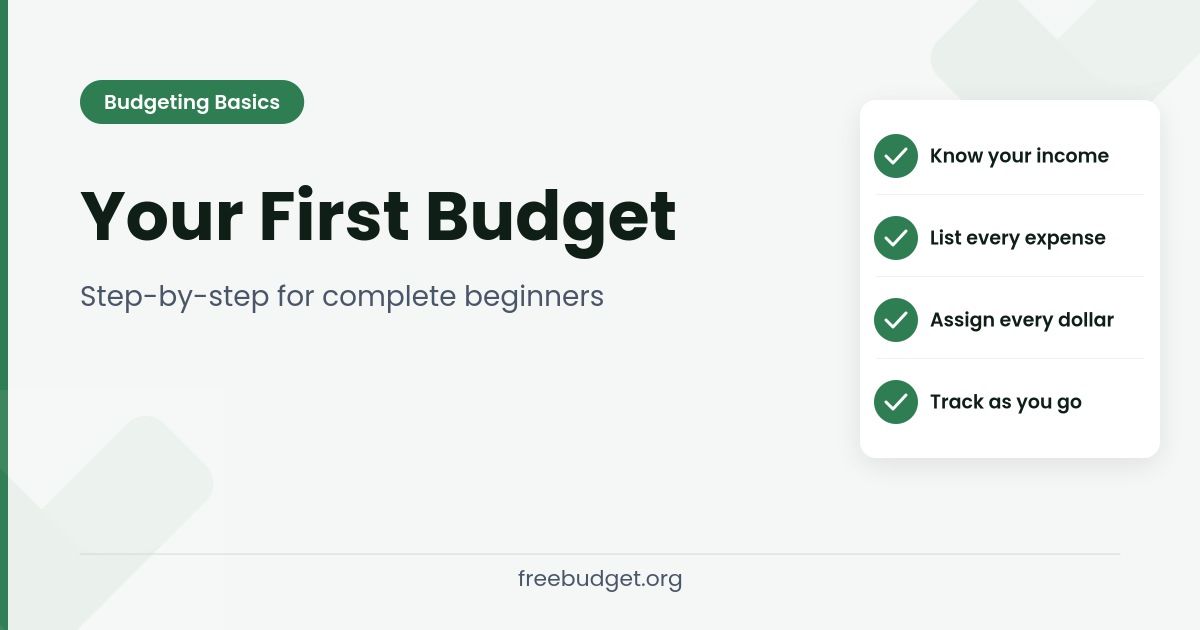
Most people who say they can't budget have never actually tried.
That sounds harsh, but hear it out. "Budgeting" carries decades of baggage: spreadsheets, guilt, restriction, the sense that you need to be a certain kind of disciplined person to pull it off. So most people never start. They tell themselves they'll figure it out when they earn more, when life settles down, when they have time.
Here's what the data says: people who track their spending save 20% more than those who don't. Not because they're more disciplined. Because they can see what's happening.
You don't need a finance degree to start a budget. You need about 30 minutes and a willingness to look at the numbers honestly.
Here's exactly how to do it.
Step 1: Figure Out Your Actual Take-Home Income
Not your salary. Not your gross pay. The number that actually lands in your bank account after taxes, benefits, and deductions.
If you're salaried, this is easy. Just look at your most recent paycheck. If you're paid bi-weekly, multiply by 26 then divide by 12 for your monthly figure. If you're hourly or freelance, use the last 3 months of deposits and average them.
This number is your budget ceiling. Every dollar you allocate in your budget has to come from this number. Nothing else.
A common mistake: building a budget around gross salary and wondering why it never works. Your budget lives in take-home land.
Step 2: List Your Fixed Expenses First
Fixed expenses are the ones that hit every month whether you want them to or not, and they're roughly the same amount each time.
Typical fixed expenses:
- Rent or mortgage
- Car payment
- Insurance premiums (health, car, renters)
- Minimum debt payments (student loans, credit cards)
- Phone bill
- Subscriptions with set monthly costs
Write these down with the exact amounts. Don't estimate. Look them up. Most people are surprised by the total.
For the average American, fixed expenses alone eat 50-60% of take-home income before a single grocery run.
Step 3: Estimate Your Variable Expenses
Variable expenses change month to month but follow predictable patterns. These are the categories most budgets underestimate.
Common variable categories:
- Groceries
- Gas and transportation
- Dining out
- Entertainment
- Clothing
- Personal care
- Household supplies
For your first budget, look back at the last 2-3 months of bank or credit card statements and average what you actually spent in each category. Not what you wish you'd spent. What you actually spent.
This step is where most people have their first real moment of clarity. The $40 you thought you spend on coffee per month is often $140 when you count it up.
Step 4: Don't Forget Irregular Expenses
This is the category that sinks most first-time budgets, because irregular expenses feel invisible until they hit.
Think about expenses that don't come every month but do come every year:
- Car registration and maintenance
- Annual subscriptions (streaming, software, memberships)
- Holiday and birthday gifts
- Medical copays and dental visits
- Home or apartment repairs
- Travel
Add up your best estimate for the year, then divide by 12. That's what you should be setting aside every month in a dedicated "irregular expenses" or sinking fund category. When the car needs tires in October, the money is already there.
This single habit separates people who make budgeting work from people who quit after three months.
Step 5: Set a Savings Target Before You Calculate the Rest
Most first-time budgets treat savings as what's left after everything else. That's why most first-time budgets save nothing.
Decide your savings amount first. Even if it feels uncomfortable.
The standard recommendation is 20% of take-home income. If that feels impossible right now, start with whatever you can commit to consistently. Even $50 a month is real money. The habit matters more than the amount in year one.
Add your savings target to your fixed expenses before you do anything else. Treat it like a bill you pay yourself.
Step 6: Make the Numbers Balance
Here's the core idea behind zero-based budgeting, which is the most effective budgeting method for beginners: every dollar of income gets assigned a job until you reach zero.
Income minus (fixed expenses + variable expenses + irregular fund + savings) = 0
If you're negative, your expenses exceed your income and you need to adjust: either reduce spending in variable categories or, in serious cases, address fixed expenses.
If you're positive, you have unassigned dollars. Don't leave them floating. Give them a job. Extra debt payoff, a vacation fund, an emergency fund, investing. Unassigned money gets spent on nothing in particular, which is fine but rarely intentional.
The goal isn't to get to zero and call it done. The goal is to make every dollar a conscious decision before the month starts.
Step 7: Track As You Go
A budget you build on the first of the month and ignore for 30 days is just a wish list.
Tracking your actual spending throughout the month is where the behavior change happens. When you see that you've already spent $180 of a $200 dining budget by the 15th, you have information you can act on. Without tracking, you find out on the 30th that you spent $380.
You don't need to be perfect. You don't need to log every transaction the moment it happens. But checking in 2-3 times a week takes about 5 minutes and is the difference between a budget that works and one that doesn't.
Step 8: Review and Adjust at the End of the Month
Your first budget will be wrong. That's not a failure. It's data.
You'll underestimate some categories (almost everyone underestimates groceries and dining). You'll forget categories entirely. You'll have months with one-off expenses that throw everything off.
At the end of month one, review what happened and adjust for month two. Then do it again. By month three, your budget will actually reflect how you live, and that's when you start seeing real results.
The people who make budgeting work long-term aren't perfect budgeters. They're consistent reviewers. They treat each month as a data point, not a test they passed or failed.
What Tool Should You Use?
The honest answer: the one you'll actually use.
A notebook works. A spreadsheet works. A budgeting app works. The methodology matters more than the medium.
That said, the biggest reason people quit budgeting isn't lack of discipline. It's friction. If your tool is inconvenient, you stop using it. Apps reduce friction: transactions sync or import, categories are pre-built, and you can check in from your phone at any time.
YNAB is the gold standard for zero-based budgeting methodology. It's $109 a year, and it's genuinely worth it for people who engage with it deeply. Monarch Money is excellent for couples at $99 a year. Rocket Money is solid for subscription tracking at $7-14 a month.
If you want to try zero-based budgeting without paying anything, FreeBudget does it for free. Not a free trial. Actually free. You can import transactions via CSV from any bank, track categories, set budget amounts, and monitor your net worth without a subscription. Bank sync (live account connections) is available for $0.99/month if you want it, but it's not required to get started.
For a first budget especially, free removes one more reason to quit.
The Only Thing That Actually Matters
Budgets fail for one reason: people stop looking at them.
Not because budgeting is hard. Not because they're bad with money. Because life gets busy, a few weeks go by without checking in, and by the time they look again it feels like too much to catch up on.
The antidote is a habit, not a perfect system. Schedule 10 minutes every Sunday to review the week. Set a monthly date to reset the budget for the coming month. Make it a recurring calendar event if that helps.
The people who make this work aren't finance nerds with elaborate spreadsheets. They're people who built a small, consistent habit around looking at their money.
Start simple. Be honest with the numbers. Review regularly. Adjust as you go.
That's the whole thing.
If you want to try it with a free tool, freebudget.org is a good place to start. No credit card, no trial period, no catch.